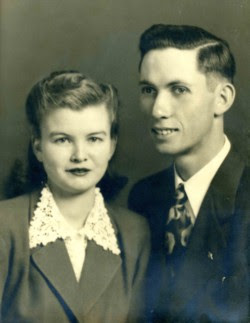
Dorothy Ruth Hoogstraten
(February 28, 1960 – August 14, 1980), known professionally as
Dorothy Stratten, was a Canadian Playboy Playmate, model, and
actress. Stratten was the Playboy Playmate of the Month for August
1979 and Playmate of the Year in 1980. Stratten appeared in three
comedy films and in at least two episodes of shows broadcast on US
network television. She was murdered at the age of 20 by her
estranged husband and manager Paul Snider, who died by suicide on the
same day. Her death inspired two motion pictures, the 1981 TV movie
Death of a Centerfold and the 1983 theatrical release Star 80, as
well as the book The Killing of the Unicorn and the songs
"Californication" by the Red Hot Chili Peppers, "The
Best Was Yet to Come" by Bryan Adams and "Cover
Girl" by the Canadian rock band Prism.
Life and career
Stratten was born in Grace Maternity
Hospital in Vancouver, British Columbia, on February 28, 1960, to
Simon and Nelly Hoogstraten, who had emigrated from the Netherlands.
In 1961, her brother John Arthur was born and, in May 1968, her
sister Louise Stratten.
In 1977, Stratten was attending
Centennial High School in Coquitlam, British Columbia. Concurrently,
she was working part-time at a local Dairy Queen, where she met
26-year-old Vancouver-area club promoter and pimp Paul Snider, who
began dating her. Snider later had a photographer take professional
nude photos of her which were sent to Playboy magazine in the summer
of 1978. She was under the age of 19 (the legal age of majority in
British Columbia), so she had to persuade her mother to sign the
model release form.
In August 1978, she moved to Los
Angeles, where she was chosen as a finalist for the 25th Anniversary
Great Playmate Hunt. Snider joined her in October, and in June the
following year, they married. With her surname shortened to Stratten,
she became Playboy's Miss August 1979, and began working as a bunny
at the Playboy Club in Century City, Los Angeles. Hugh Hefner had
high hopes Stratten could have meaningful crossover success as an
actress. She featured in episodes of the television series Buck
Rogers and Fantasy Island. She also had small roles in 1979 in
Americathon and the roller disco comedy Skatetown, U.S.A., and a lead
role in the exploitation film Autumn Born.
Hefner reportedly encouraged Stratten
to sever ties with Snider, calling him a "hustler and a
pimp." Rosanne Katon and other friends warned Stratten
about Snider's behavior. Stratten began an affair with Peter
Bogdanovich while he was directing They All Laughed (1981).
When Stratten arrived at the Playboy
Mansion for the 25th Anniversary Playmate Hunt she was very shy and
naive. She was very uncomfortable with the casual nudity and sex.
Several contemporary playmates including Pamela Bryant, Gail Stanton
and Marcy Hanson befriended Stratten and protected her from some of
Hefner's friends whom they considered to be predators.
March 1980 – July 1980
On March 22, 1980, Stratten flew to New
York City to begin work on what became her last film project, They
All Laughed, a romantic comedy being directed by Bogdanovich.
Laughed would be Stratten's fifth movie in a career that had only
begun the year before and represented her first substantial role in a
big-budget picture, playing the unhappily-married love interest of
John Ritter, one of the film's stars. Bogdanovich, who also wrote
the screenplay, said in an interview that he had based the backstory
of Stratten's character on what he'd learned about her marriage to
Snider.
Stratten had spent the first two and a
half months of 1980 completing her Playmate of the Year shoot and
making her previous movie, Galaxina, in Southern California. With all
her work close to home, Snider assumed the role of his wife's
chauffeur, as well as her ersatz manager and acting coach. But
Snider's near-constant presence, as well as his criticism of and
almost daily arguments with his wife, caused Stratten so much stress
that her co-workers at Playboy and the Galaxina set took notice of
the tension in the relationship. As the spring of 1980 approached,
Snider insisted on accompanying his wife to New York, but Stratten at
least recognized the problems he could cause while she was making the
most important picture of her young career. Also wanting the freedom
to pursue a relationship with Bogdanovich, Stratten convinced Snider
to remain in Los Angeles after explaining that the director had
decided to close the set of his new film to all but the cast and
immediate crew.
Stratten and Bogdanovich consummated
their affair on the day after her arrival in New York.
In April, Stratten briefly returned to
California to prepare for her upcoming introduction as the new
Playmate of the Year and follow-on publicity tour. With several
months of filming left to be completed in New York, this was the last
time that she would live with Snider in their Los Angeles-area home.
On Wednesday, April 30, at a luncheon
held on the grounds of Hefner's mansion, Stratten was presented to
the assembled entertainment press as the 1980 Playmate of the Year.
In his introductory remarks, Hefner noted that Stratten was from
Canada and had received $200,000 in cash and gifts in addition to the
title. In a fleeting comment, Hefner also acknowledged the effect
that Stratten's charming combination of beauty, intelligence, and
sensitivity had on many who knew her when he said, ". . and
she is something rather special. They always are, but Dorothy is
really quite unique." After taking the lectern, Stratten
thanked Mario Casilli, the photographer who shot both her Playmate of
the Month and Year pictorials, several Playboy executives, and
finally Hefner, who she declared "has made me probably the
happiest girl in the world today."
Later that evening, Stratten appeared
as a guest on The Tonight Show Starring Johnny Carson.
The next day Stratten began a two-week
promotional tour of Canada. Having no events scheduled over the first
weekend, she flew to New York on a whim to surprise Bogdanovich.
Conflicted about her marriage now more than ever, Stratten wrote to
her husband from Canada asking for more freedom in their
relationship. With his wife beyond his immediate control and fearing
the worst, upon reading her letter, Snider telephoned from Los
Angeles and flew into a rage when Stratten answered. The Canadian
tour was arranged to end in her hometown of Vancouver so Stratten
might relax for a few days with family before returning to work on
They All Laughed. However, Snider appeared in Vancouver at the last
minute, where he coerced her into spending some of her brief vacation
making personal appearances at several local nightclubs. Since Snider
knew many of the club owners, he personally negotiated and collected
Stratten's appearance fees and then pocketed the entire sum when she
returned to Bogdanovich in New York City.
During this time in Vancouver, it was
reported that Stratten and Snider had a particularly heated argument.
At some point during the fight, Stratten offered to give up her
acting career and suggested the couple permanently return to Canada;
however, Snider rebuffed his wife's attempt to save their marriage.
In the days and weeks after Snider
returned to Los Angeles, he found it increasingly difficult to get in
touch with Stratten. In late June, just a few weeks after their first
wedding anniversary, Snider received another letter from her, this
one announcing that they were now physically and financially
separated. Snider had several responses to the second letter; he
emptied the couples' joint bank account, he had a brief affair with
an old girlfriend, and, now convinced that Stratten was having an
affair of her own with Bogdanovich, Snider hired a private detective
to gather evidence of his wife's infidelity.
As a foreign national living in the US
without a green card that would allow him to hold a job and having no
other source of regular income, Snider relied on Stratten, now
through her business manager, to pay the monthly household bills.
Little was left over for extravagances, such as the expenses incurred
by a private detective working a case 3,000 miles from home.
Therefore, over the summer of 1980, Snider began selling Stratten's
Playmate of the Year prizes at a loss for quick cash, the most
notable example being a Jaguar sports car that Playboy had valued at
$26,000.
By mid-July, principal photography on
They All Laughed was completed and the New York production wrapped.
On Wednesday, July 30, Stratten and Bogdanovich returned to Los
Angeles after having spent a ten-day holiday together in England.
Stratten's official L.A. residence was now at the address of a
newly-rented Beverly Hills apartment, but in actuality she had
quietly moved into Bogdanovich's mansion in Bel Air.
August 1980
On the night of July 31, 1980, Snider,
by now aware that his estranged wife was back in L.A. and living with
Bogdanovich, hid among the shadows just outside the director's estate
carrying a borrowed handgun, intending to shoot anyone who appeared
at the entrance to the property. After several hours of inactivity,
Snider grew impatient and left, drove up into the hills overlooking
the city and, admitting later to a friend, had thoughts of suicide.
At approximately noon on Friday, August
8, Stratten and Snider saw each other for the first time in nearly
three months at Snider's (and Stratten's former) house in West Los
Angeles. After having already persuaded Stratten to pose for Playboy
and then marry him, Snider was supremely confident before the meeting
that he would convince his wife to take him back. But his hopes of a
reconciliation were quickly shattered when Stratten admitted that she
had fallen in love with Bogdanovich and wanted to finalize their
separation. A dejected Snider agreed to meet Stratten one more time
the following week to discuss a monetary settlement.
Later that afternoon, less than a week
before Stratten's murder, Snider had to return the borrowed gun to
its owner. Over the next five days, he would become obsessed with
getting another.
On August 9, the day after his meeting
with Stratten, Snider and the private detective he'd hired went to a
local gun store. After being told that the store couldn't sell him a
firearm because of his Canadian citizenship, Snider asked the
detective to buy the gun Snider wanted for him. The man said no.
When Snider saw the private detective again the following day, he
tried to convince the man to buy him a machine gun, for "home
protection" as Snider explained, but the detective talked
him out of the idea. The next day, August 11, Snider drove out into
the San Fernando Valley to look at a gun he'd found for sale in a
newspaper. He got lost, however, and eventually gave up and went home
before finding the owner's address.
August 13, 1980 marked the second
anniversary of the day that Stratten had first arrived in Los Angeles
to begin her acting and modeling career.
Murder
On August 13, 1980, the day before
Stratten was murdered, Snider bought a used, 12-gauge, pump action
shotgun from a private seller he found in a local classified ad.
Later that evening in a conversation with friends, Snider described
how he had purchased a gun that day and finished his story by
cryptically declaring that he was "going to take up hunting."
During the same conversation, barely
more than 12 hours before the murder, an otherwise jovial Snider
casually brought up the subject of Playmates who had unexpectedly
died. In particular, he spoke of Claudia Jennings, an actress and
former Playmate of the Year who had been killed in a car accident the
year before. Snider made several morbid remarks to his companions
related to the problems at Playboy magazine caused by Jennings'
death, including a comment about how the editors will pull nude
photos of a dead Playmate from the next issue if there's time.
Stratten arrived for her meeting with
Snider at his rented West Los Angeles house at approximately noon on
Thursday, August 14. She had spent the morning conferring with her
business manager, and one of the topics the pair discussed was the
amount of the property settlement the Playmate would offer her
estranged husband that afternoon. The police later found $1,100 in
cash among Stratten's belongings in the house, which she had
apparently brought for Snider as a down payment.
Towards the end of her morning meeting,
Stratten's business manager made a fateful observation: that his
young client could avoid spending any more time with her husband by
handing off the remaining separation and divorce negotiations to her
lawyer. Stratten replied that the process would go easier if she
dealt with Snider personally, explaining that he was being nice about
everything and finally adding, "I'd like to remain his
friend."
Snider's two roommates had left in the
morning, so the couple was alone when Stratten stepped into the house
that she had shared with her husband until just a few months earlier.
By all appearances, Stratten had spent some time in the living room,
where her purse was found lying open, before she and Snider went into
his bedroom.
By eight o'clock that evening, both of
the roommates had returned to the house. They saw Stratten's car
parked out front and noted that Snider's bedroom door was closed.
Assuming that the couple had reconciled and wanted their privacy, the
roommates spent the next several hours watching television in the
living room.
Alerted by Snider's private detective,
the roommates entered the bedroom shortly after 11 pm that night and
discovered the bodies of Stratten and Snider. Each had been killed
by a single blast from Snider's shotgun. Both bodies were nude.
According to the police timeline, Snider had shot Stratten that
afternoon within an hour of her arrival at the house. Snider then
committed suicide approximately one hour after the murder.
Sometime after midnight in the early
morning of August 15, the private detective telephoned the Playboy
Mansion and told Hefner that Stratten had been murdered. Hefner then
called Bogdanovich. After collapsing at the news, Bogdanovich was
sedated. Stratten's mother was told of her daughter's death at her
Vancouver-area home later that morning by an RCMP Mountie.
Stratten's body was cremated and the
remains interred at the Westwood Village Memorial Park cemetery in
Los Angeles. The remains of Hefner (d. 2017) and Marilyn Monroe (d.
1962), his magazine's first centerfold, are interred there as well.
The epitaph on Stratten's grave marker
includes a passage, chosen by Bogdanovich, from Chapter 34 of the
Ernest Hemingway novel A Farewell to Arms. Three years after
Stratten's murder, the author's granddaughter, Mariel Hemingway,
played Stratten in Star 80, the Bob Fosse biopic about the doomed
Playmate and her husband.
In early November, 1980, less than
three full months after Stratten's death, the New York weekly
newspaper The Village Voice ran a front page article about the events
leading up to her murder. The title of the piece, "Death of
a Playmate", by Teresa Carpenter, is something of a misnomer
in the sense that it quickly becomes obvious that the author has
deliberately placed Snider, not Stratten, at the center of the story.
Carpenter in fact spends a great deal of the article framing Snider
in a sympathetic light, going so far as to use several paragraphs to
cast doubt about whether he committed the murder. In stark contrast,
Carpenter treats Stratten in a contemptuous, dismissive manner that
at times borders on outright hostility, deriding, in a petty example
her teenage poetry as "plodding iambs" and summing
up the dead playmate's cut-short acting and modeling career by coldly
pronouncing, "Whether or not Dorothy Stratten would have
fulfilled her extravagant promise can't be known. Her legacy will not
be examined critically because it is really of no consequence."
Despite her reservations about Snider's
guilt, by the end of the article Carpenter does allow that he was the
one who killed his wife, finally acknowledging "And yet
Snider appears to have been following a script of his own choosing."
The irony of this concession, however, is that it is not born out of
any careful examination of the facts and evidence, but rather made
because it conveniently serves the core idea of Carpenter's story and
the reason why she chose to undercut Stratten and bend the reader's
empathy towards her murderer: to make the argument that Hefner and
his magazine bear as much responsibility for the death of Dorothy
Stratten as the man who killed her.
Assuming Hefner's perspective,
Carpenter cuts through his disbelief in the wake of Stratten's
shocking murder. "The irony that Hefner does not perceive . .
. " her argument asserts, " . . . is that Stratten
was destroyed not by random particulars, but by a germ breeding
within the ethic." She then pivots to the foundational idea
underpinning her reasoning and presumed motive for Snider's killing
rage: "One of the tacit tenants of the Playboy philosophy –
that women can be possessed – had found a fervent adherent in Paul
Snider." But lacking any facts in his backstory that would
directly link Playboy to her claim of a "fervent adherent",
beyond the rather tenuous association that Snider was married to
the reigning Playmate of the Year, Carpenter is left with nothing but
speculation and sensationalism to prove her point. "He
[Snider] had bought the dream without qualification, and he had
thought of himself as perhaps one of Playboy's most honest apostles.
. . . Instead of fondling himself in private, instead of wreaking
abstract violence upon a centerfold, he ravaged a playmate in the
flesh.”
Bogdanovich and They All Laughed
In August 1981, one year after
Stratten's death, her final film, the romantic comedy They All
Laughed, which was written and directed by Bogdanovich, had its US
release. After a disappointing limited run in a handful of theaters
in the southwest, the upper Midwest, and the northeast, the picture
was quietly withdrawn.
Upset that what would be his only
project with Stratten did not have a nationwide release, and
determined that her last screen performance have a chance to be seen
by a broader audience, Bogdanovich bought the theatrical rights to
the picture. Out of his own pocket, he paid for a re-release of They
All Laughed in nearly a dozen large markets across North America
beginning in late 1981 and rolling into the following year. Despite
generally favorable reviews and strong attendance in some theaters,
Bogdanovich ultimately sank more than five million dollars, his
entire net worth at the time, into the vanity project to properly
promote and distribute the movie and rescue Stratten's film legacy.
Bogdanovich declared bankruptcy in
1985. In the process, he lost his Los Angeles home where Stratten had
lived for the last few weeks of her life.
In the years since its inauspicious
debut, They All Laughed has been recognized by filmmakers, critics,
and others as being one of Bogdanovich's best pictures. One Day Since
Yesterday, a documentary about the making and cultural importance of
Bogdanovich's romantic comedy, which includes interviews with the
director and his remembrances of Stratten, premiered in 2014.
The Killing of the Unicorn
In August 1984, four years after
Stratten's death, the publisher William Morrow released a book by
Bogdanovich titled The Killing of the Unicorn: Dorothy Stratten
1960-1980.
The Killing of the Unicorn is by turns
a biography of Stratten, a memoir of Bogdanovich's affair with the
married Playmate who was half his age, and a scathing, feminist
attack on Hefner, his Playboy philosophy and the hedonistic sexual
mores he celebrated in his magazine and practiced at his mansion, and
the entire Playboy organization. By far the most controversial part
of the book is the director's claim that Hefner had sexually
assaulted a then eighteen-year-old Stratten in August 1978. According
to Bogdanovich's allegation the assault occurred while the two were
alone in a secluded area of the Playboy Mansion at the end of
Stratten's first day of posing for the magazine's photographer.
(Bogdanovich chose to use the word "seduced" to
describe Hefner's behavior in the book, however, he originally used
the word "raped" in the drafts of his manuscript.
Bogdanovich and the publisher made the change after being threatened
with a lawsuit by Hefner's lawyers.)
Among the other allegations that
Bogdanovich made in his book, the most significant are: 1) That
Stratten had not married Snider out of love, but rather used her
marriage as an excuse to block the advances of Hefner who,
Bogdanovich claimed, pursued Stratten as a sexual partner after the
purported assault, 2) That Stratten loathed nude modeling and dealing
with Playboy in general, and only tolerated the humiliating work in
order to promote her acting career, and 3) That Hefner was
responsible, in part, for enabling Snider's killing rage when he was
banned from entering the Playboy Mansion just days before the murder.
Bogdanovich's underlying assertion for the last charge is that
Snider was banned because Hefner hated the man. In his defense,
Hefner explained that the purpose of the ban was to encourage
Stratten and Bogdanovich to appear at the mansion as a couple.
Nearly every review of The Killing of
the Unicorn in the US press was negative. While few objected to
Bogdanovich's attacks on Hefner and Playboy, many were skeptical of
his newfound feminism, pointing out, for example, that he "seemed
oblivious to his own sexist susceptibility to 'the whore/Madonna
complex' in his view of women." The review that appeared in
the Chicago Tribune, for instance, had its tone concisely summarized
in the blunt headline that led off the piece, "Shabby little
shocker." Film critic Roger Ebert, writing for the
crosstown Chicago Sun-Times, managed to express empathy for
Bogdanovich and the tragedy of Stratten's death, but was no less
critical, stating that he could understand why Bogdanovich felt the
need to write the book, "but I wish he hadn't published it."
In a print article that appeared
shortly after the murder, Hefner, who was 33 years older than
Stratten, used the word "friendship" to describe his
relationship with her and was said to see himself as a "father
figure" to the Playmate. The image that Hefner presented to
the public as a supportive, benevolent, paternal figure to Stratten
was further emphasized the following spring when Playboy published
her biography in its May 1981 issue. It was later reported that
Hefner had personally supervised the editing of the article.
In 1985, when asked again about his
relationship with Stratten after the release of The Killing of the
Unicorn, Hefner did concede to a crucial detail that lay at the heart
of Bogdanovich's allegation. Namely, Hefner admitted that several
weeks after Stratten first arrived in Los Angeles, the two had taken
a nude soak in the "grotto" Jacuzzi on the Playboy
Mansion grounds, the place where Bogdanovich claimed the sexual
assault had occurred. In the same interview, while allowing that
they had "hugged" in the Jacuzzi, Hefner denied
having forced himself on Stratten. Hefner also denied, despite his
reputation, that he'd ever so much as made a pass at the young
Canadian, suggesting that his sexual interest in Stratten had ended
in the Jacuzzi after learning that she expected to become engaged to
her boyfriend. (This conversation would have occurred approximately
two months before Hefner would first meet Snider.)
Legacy
Stratten's murder was depicted in two
films. In the made-for-television Death of a Centerfold: The Dorothy
Stratten Story (1981), Jamie Lee Curtis portrayed Stratten and Bruce
Weitz played Paul Snider. Bob Fosse's feature film Star 80 (1983)
starred Mariel Hemingway as Stratten and Eric Roberts as Snider.
In 1983, film critic Vincent Canby
wrote "Miss Stratten possessed a charming screen presence and
might possibly have become a first-rate comedienne with time and
work".
In December 1988, at age 49,
Bogdanovich married Stratten's sister, Louise, who was 20.
Bogdanovich had paid for Louise's private schooling and modeling
classes following Stratten's death. They divorced in 2001 after
being married for 13 years.
Singer-songwriter Bryan Adams, along
with co-writer Jim Valance, wrote the song "The Best Was Yet
to Come" as the closing track for Adams' 1983 LP Cuts Like a
Knife as a dedication to Dorothy Stratten. Adams also co-wrote with
Lindsay Mitchell of the Canadian band Prism the track "Cover
Girl" for their greatest hits collection "All the
Best From Prism" (1980), which had not appeared on any prior
album.
Bush's song "Dead Meat"
is written in her memory.
Notes
Coincidentally, Ritter had played a
lead role in Stratten's first movie, the comedy Americathon (1979),
although the two had no scenes together.
Carpenter's contempt extends far beyond
Stratten to include the other Playmates, everyone else associated
with Playboy, and Bogdanovich. But the author saved her most caustic
vitriol for Hefner, who while recognized as vastly more successful at
exploiting women, is portrayed by the end of the article as otherwise
just as pathetic as Snider.